Upstart Legal
Laura Bowes
Cameron Crawford
2017-2018
Traditional legal services are out of budget for startups in Southeast Asia, which forces them to use cheap alternatives or without any legal support, leaving them vulnerable to failure.
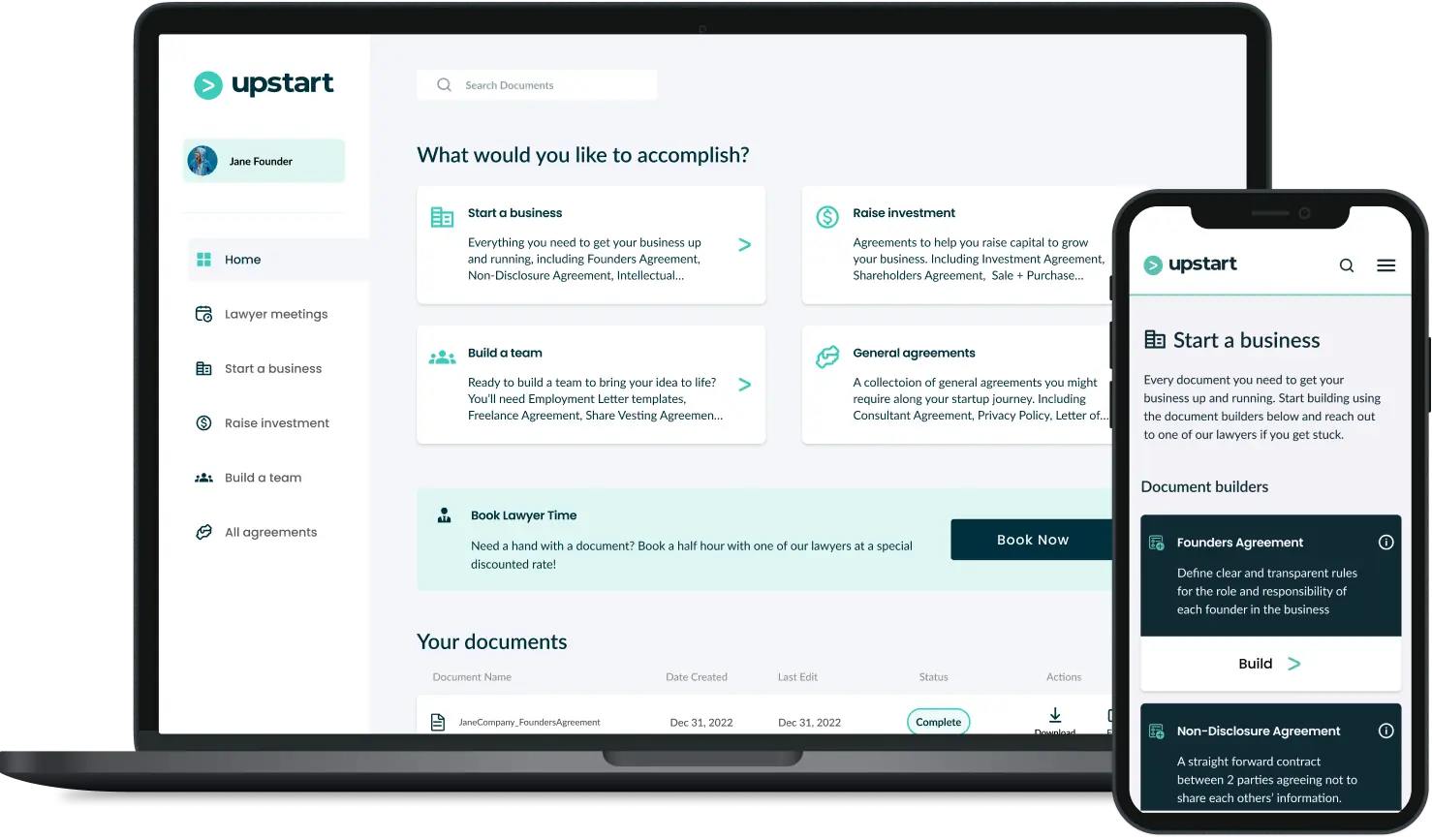
A responsive web app that allowed startup founders to organize, create and edit legal documents and gave them access to reduced cost legal advice.
I was the product design lead, responsible for strategy, research, and design.
Legal isn’t cheap. In order to provide startups with legal they need, without compromise, Upstart provided an easy-to-use, document generator and low cost legal assistance.
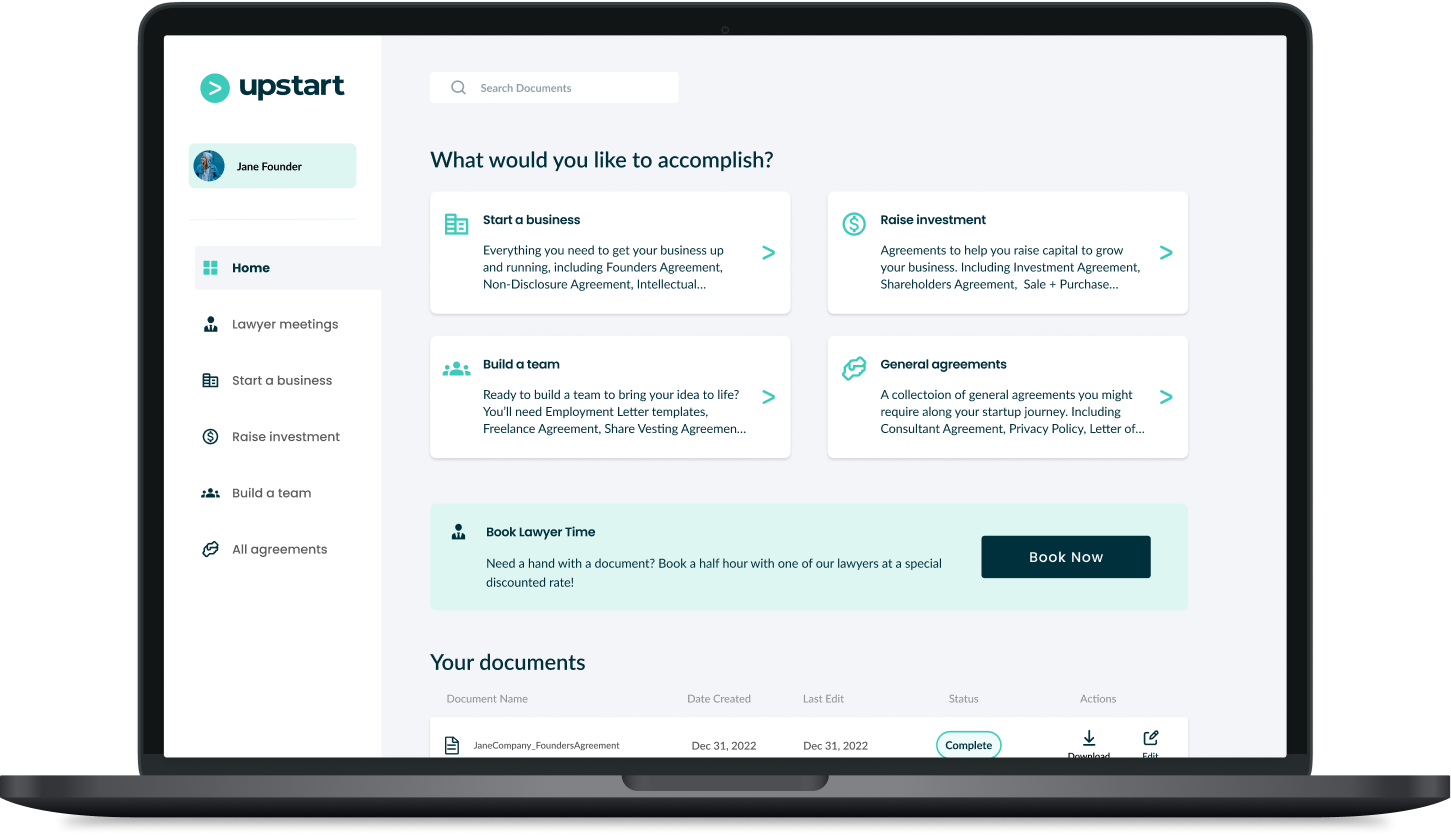
The company dashboard allowed users to create and edit their legal documents and asked journey-based questions to help them with their next step.
Simple, straight forward document builder helped founders create legal documents they could understand, without lawyers.
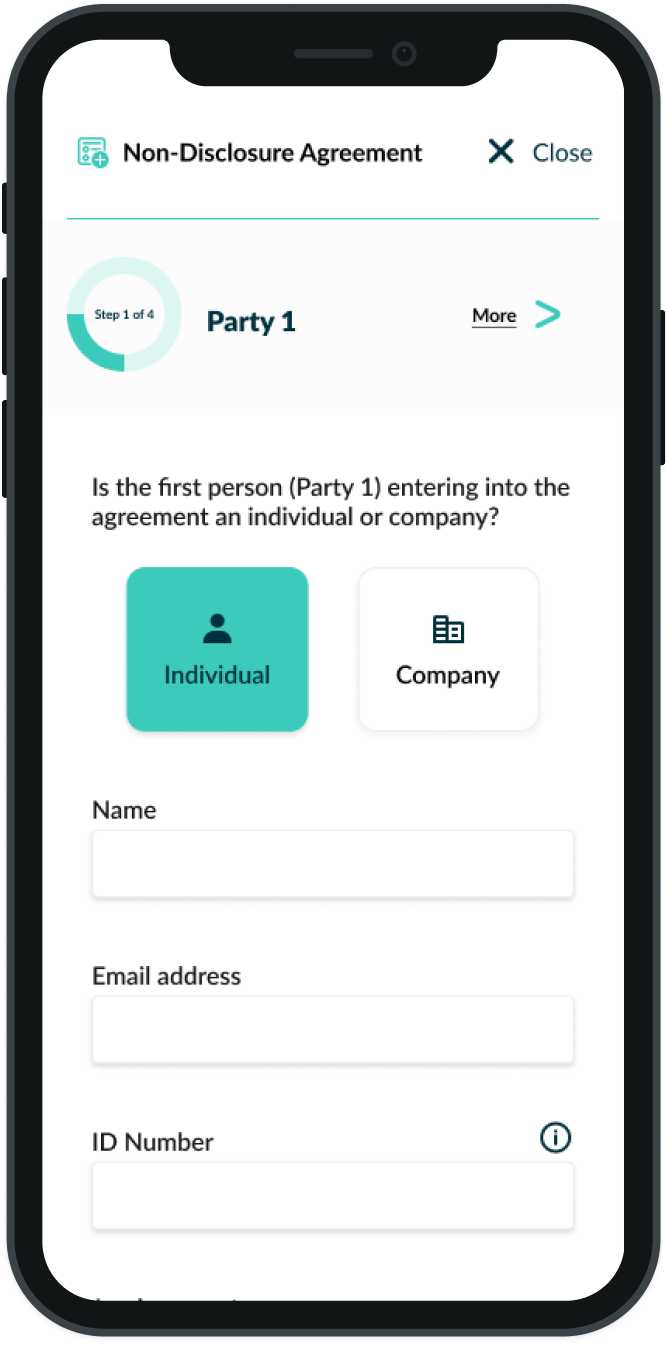
Upstart explains complex legal concepts in simple terms and guides founders through document creation with practical educational modules.
To build empathy and understand more about the feelings influencing behavioral patterns of avoiding legal coverage, we set out to learn more about the founder journey and past experiences with legal.
The team sat down with startup founders and listened to stories about previous experiences with legal issues, had founders walk us through their process if a legal issue came up, and probed to understand what triggered a 'legal issue' for them. I wrote the discussion guide and conducted the interviews with startup founders. This resulted in two primary takeaways:
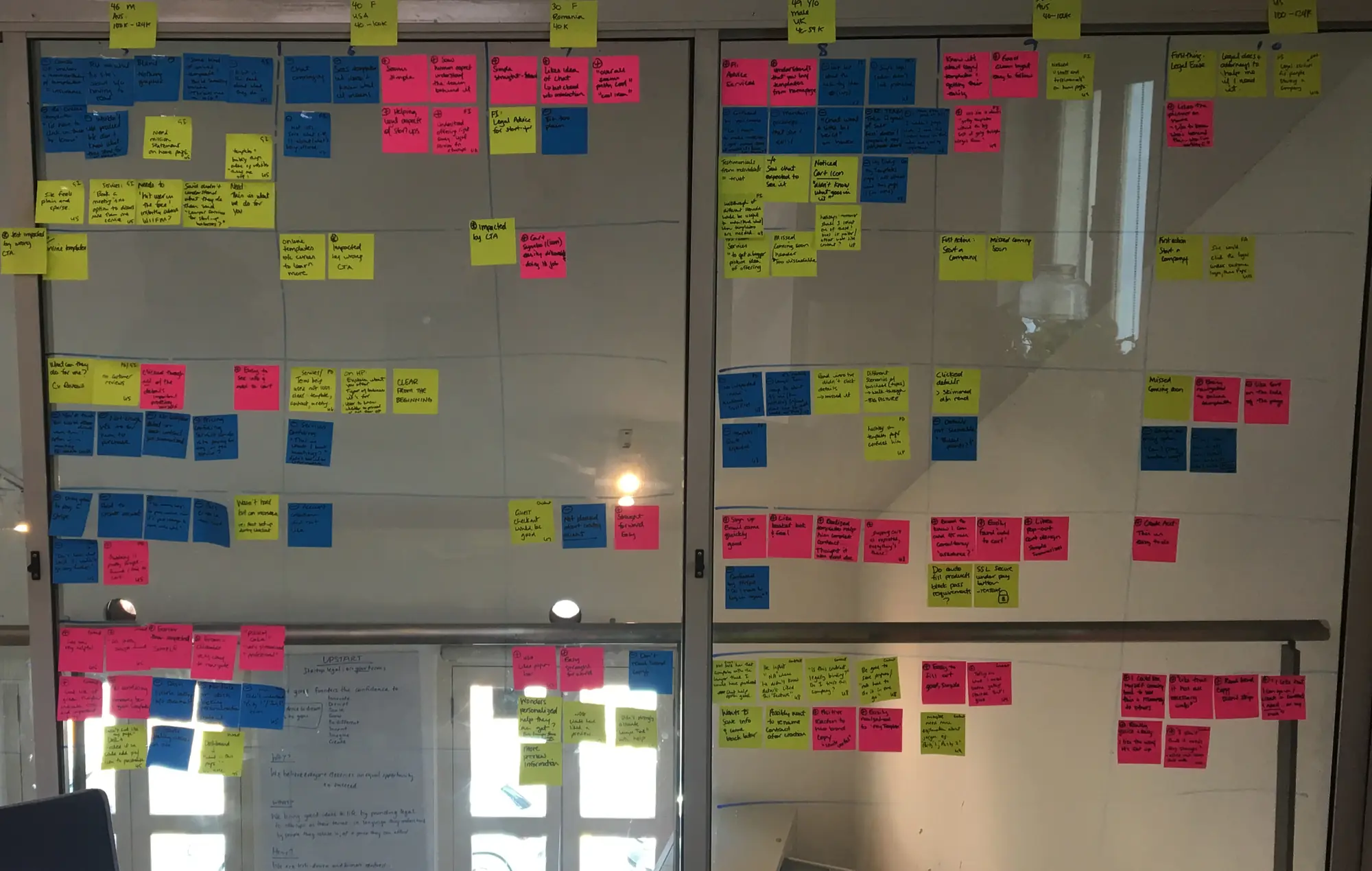
To learn more about the startup journey, I conducted expert interviews with regional venture capital (VC) companies and lawyers providing services to startups. I also planned and ran a stakeholder workshop with Upstart's founder and lawyers to learn more about current needs of startups they were engaged with. The key takeaway from these sessions was issues VC's were having:
With this in mind, we made a design decision to focus our prototype and minimum viable product (MVP) on early stage agreements and business decisions. If we could build a tool that got startups to meet the minimum requirement of legal agreements VC's were looking for, their chance of getting funded and, therefore, success was greater.
I grouped themes from all of the research and came to four insights that would drive design decisions and help determine a path to prototyping and developing a MVP.
With insight from founders and stakeholders, we shifted focus toward defining our opportunity.
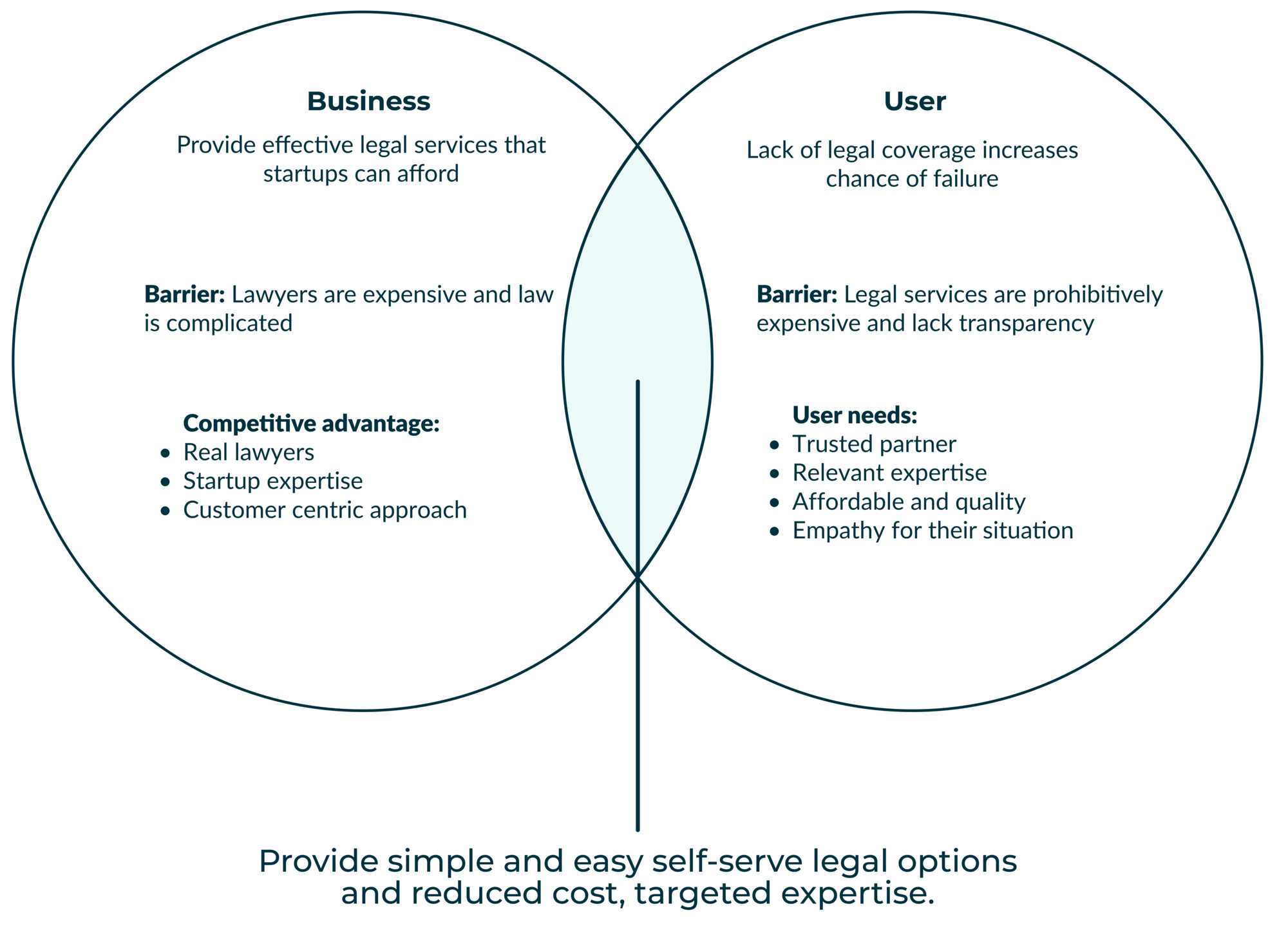
I overlaid the business context, provided by the stakeholder workshop and VC interviews, with the user perspective, gained from our insights, to define the opportunity space for our product: To provide simple and easy self-serve legal templates supported by reduced cost, targeted expertise.
With the opportunity defined and our insights to guide us, I worked with Upstart lawyers to create an experience that reframed our users feelings toward legal.
I worked with Upstart lawyers to find new ways of presenting legal concepts to design an experience that was both easy to use and made it clear when additional expertise was needed. I crafted the following design strategy and resulting design decisions to guide our work:
Based on our interviews with founders and discussions with Upstart lawyers, I defined a flow for our minimum viable product. The MVP would focus on early-stage startups who had straightforward, foundational legal needs.
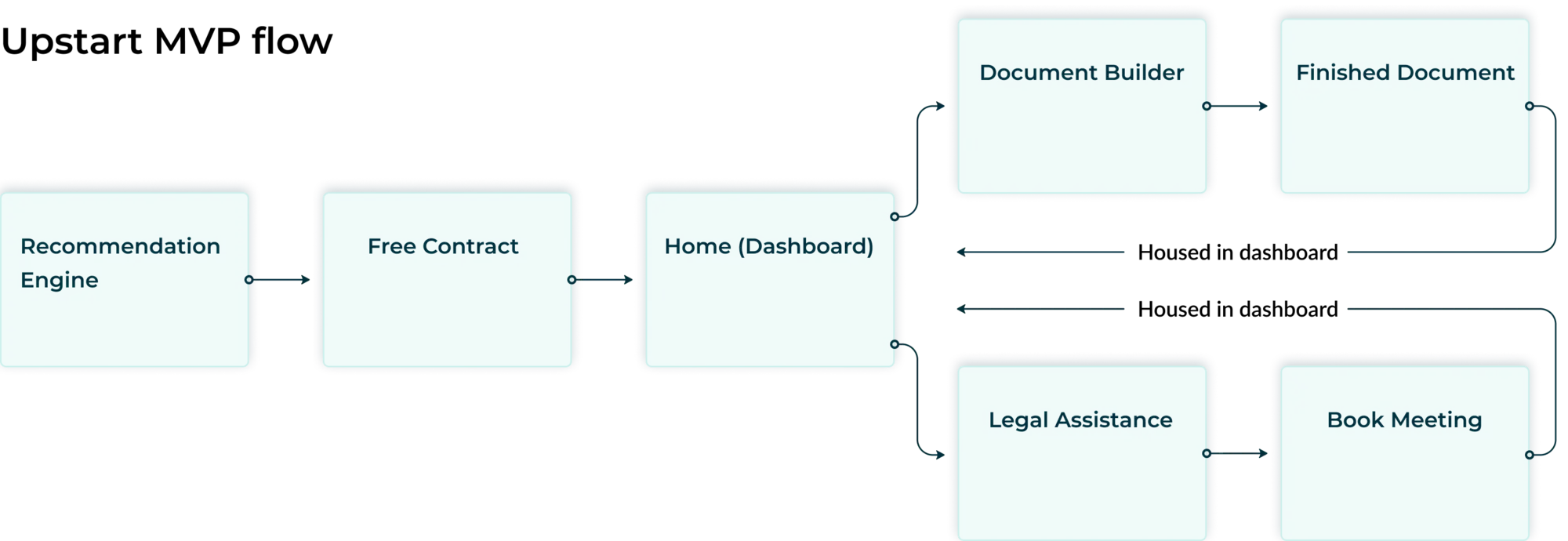
Looking to validate the MVP flow, I wireframed an experience to test. Upon further discussions with stakeholders, we decided that a recommendation engine would be de-scoped for the MVP phase; therefore, we focused the test on the dashboard and completing a contract template.
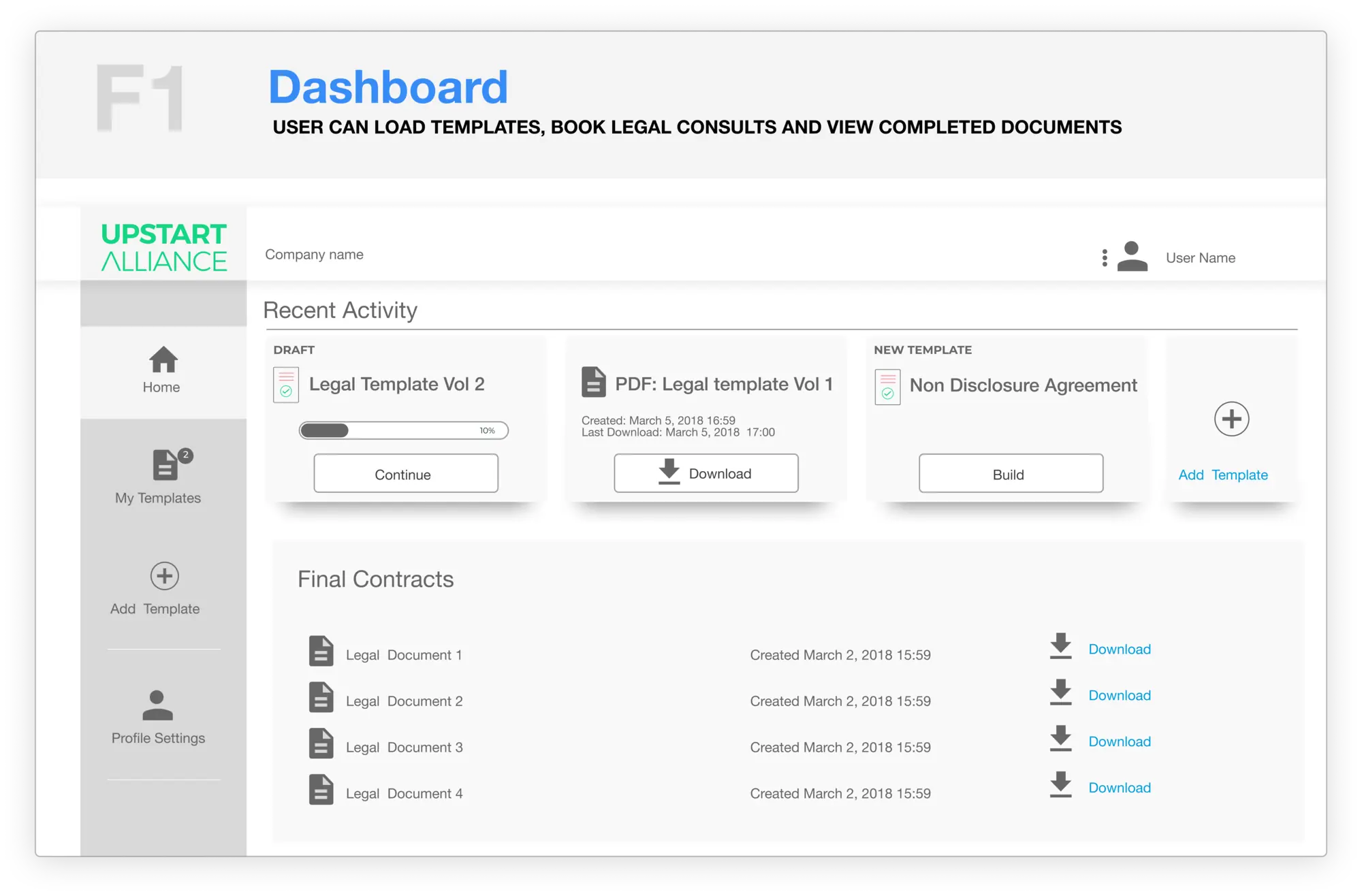
Dashboard provided users a view of their recent activity and the ability to load + edit the document builder, and view and download finished documents.
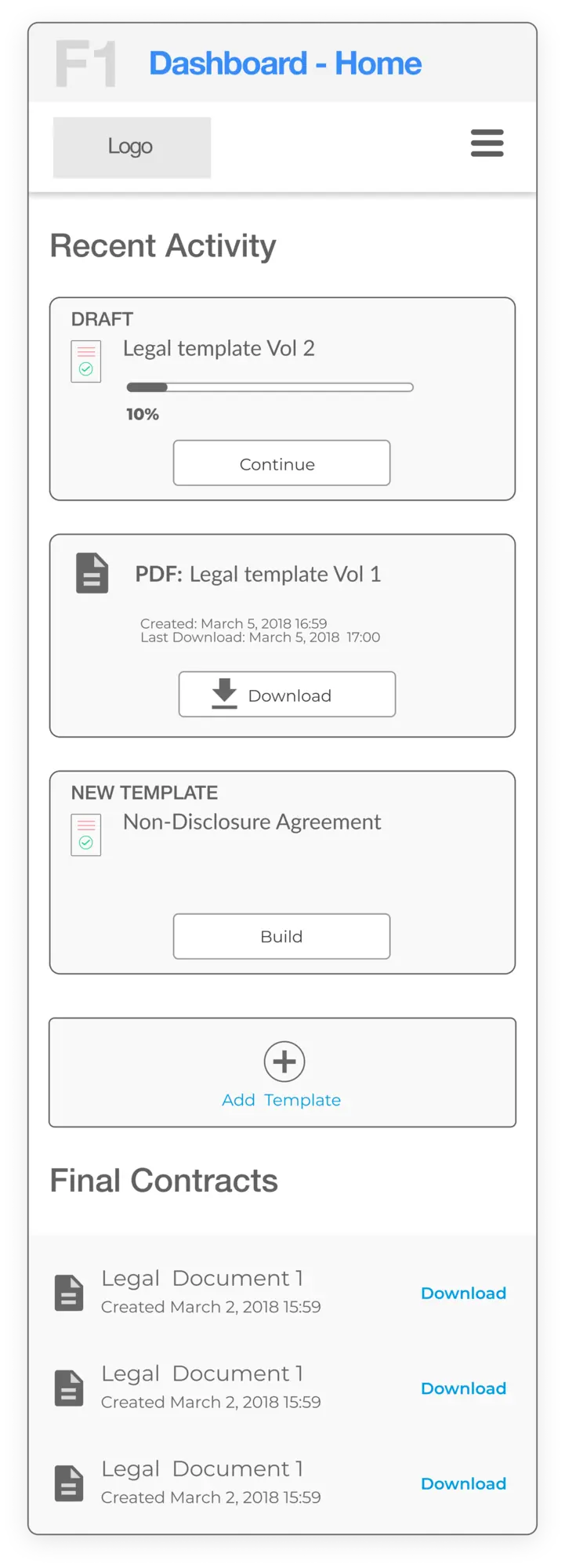
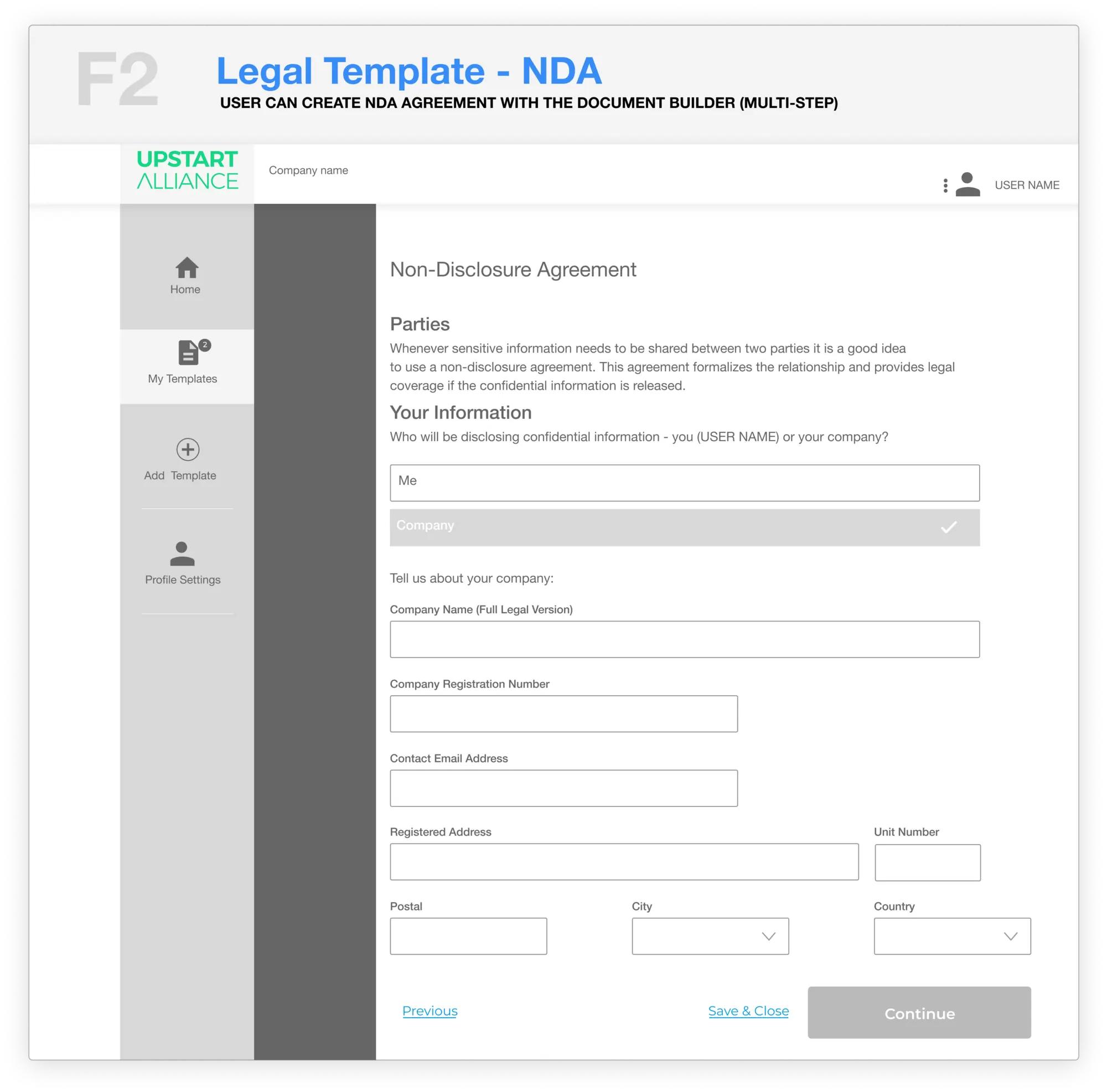
An example screen of the NDA document builder. The entire NDA template was built out for prototyping with users.
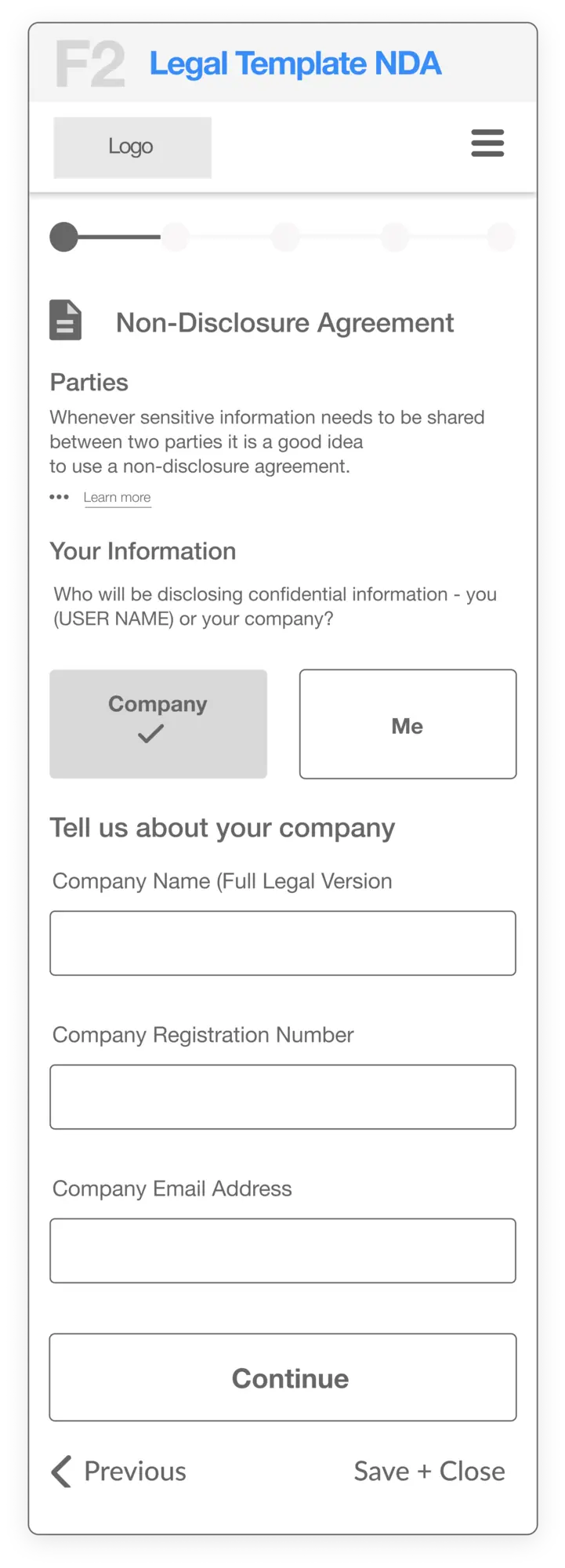
Dashboard provided users a view of their recent activity and the ability to load + edit the document builder, and view and download finished documents.
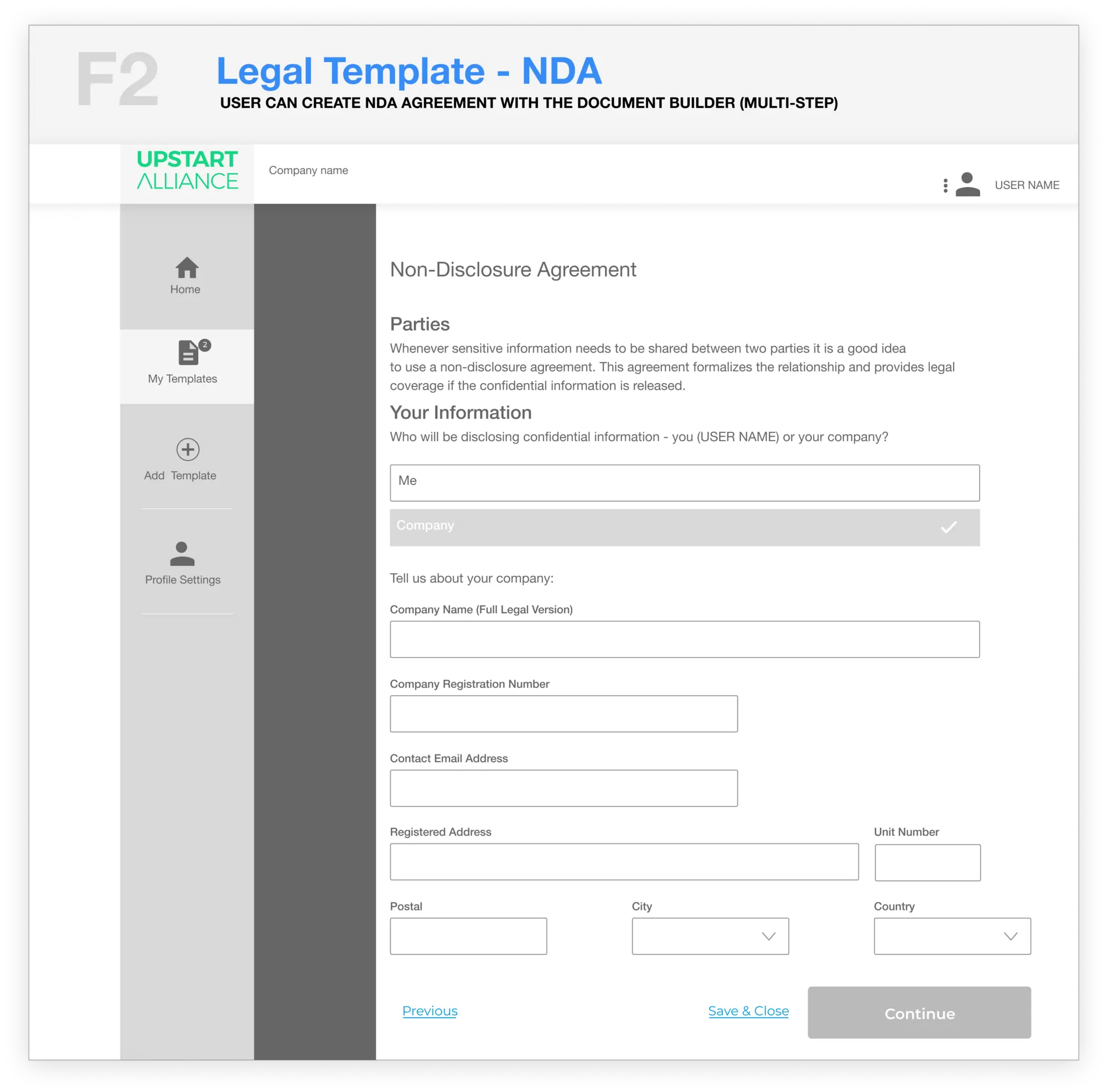
An example screen of the NDA document builder. The entire NDA template was built out for prototyping with users.
Our next step was connecting the screens into a prototype and attempting to validate our concept with users. Through prototyping, valuable insights were gained and resulted in a pivot in strategic direction from an a-la carte model to subscription.
The prototype was centered around buying a template, the dashboard, and the completion of an NDA document using our document builder. I was responsible for creating the wireframes and stringing them together into a prototype and running the sessions with users.
Data we hoped to obtain from prototype test:
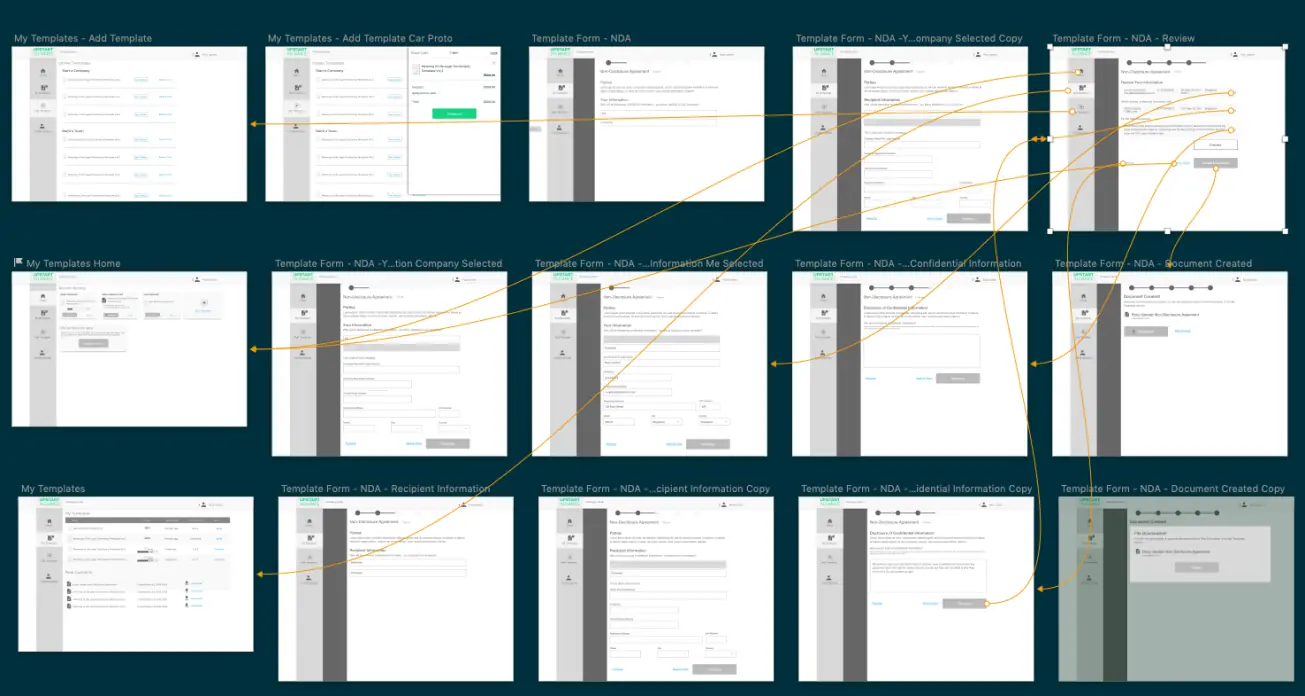
Founders found the tool useful and reported that the design and content made the task of working with a legal document easier. Aside from this, we had four findings that informed the design further:
With our prototype findings guiding design refinements, we moved to designing screens that would be developed for an MVP launch in Singapore.
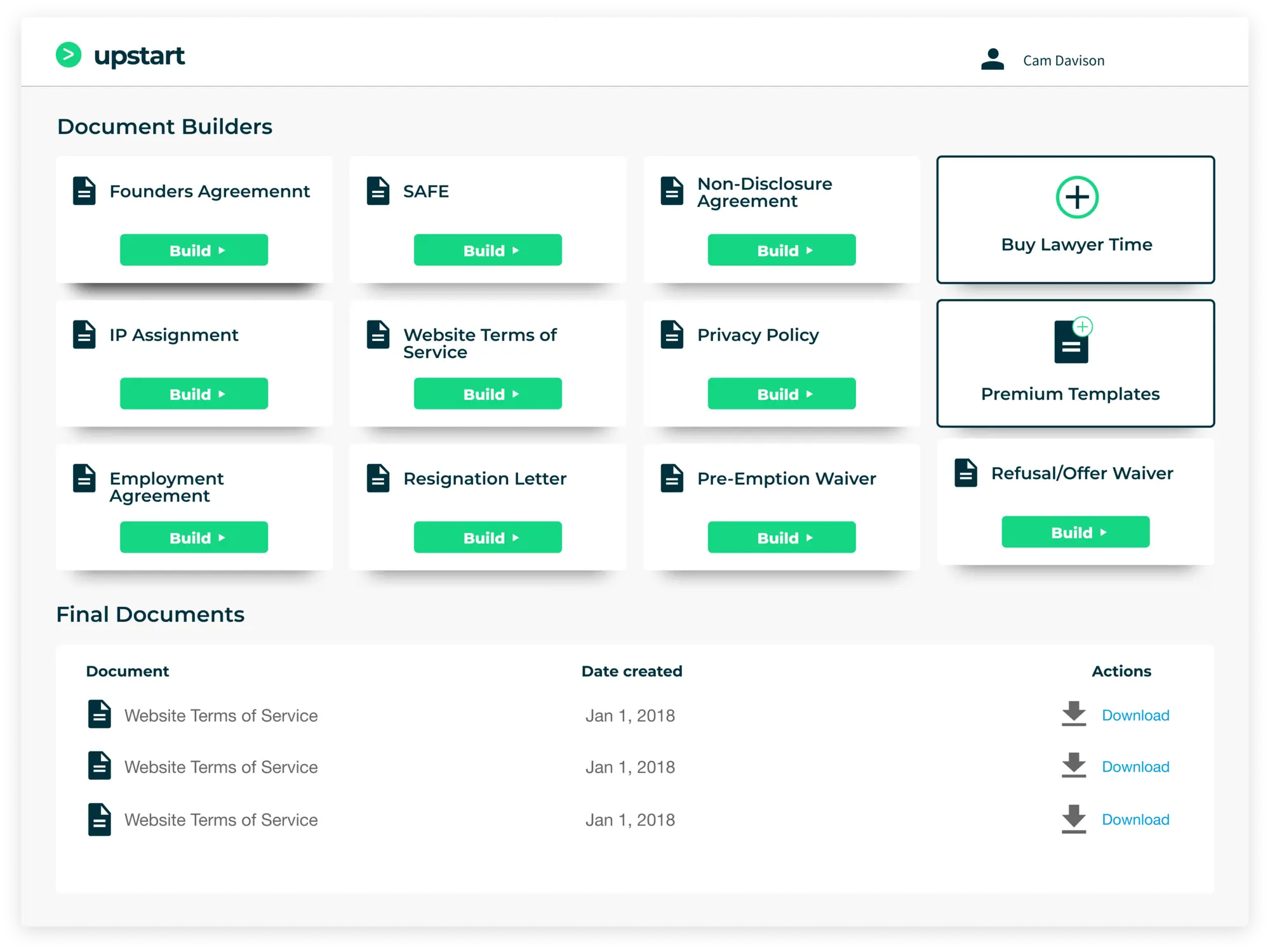
New Dashboard featuring the subscription model. All document templates were available, along with the ability to get lawyer help, premium templates and review completed documents.
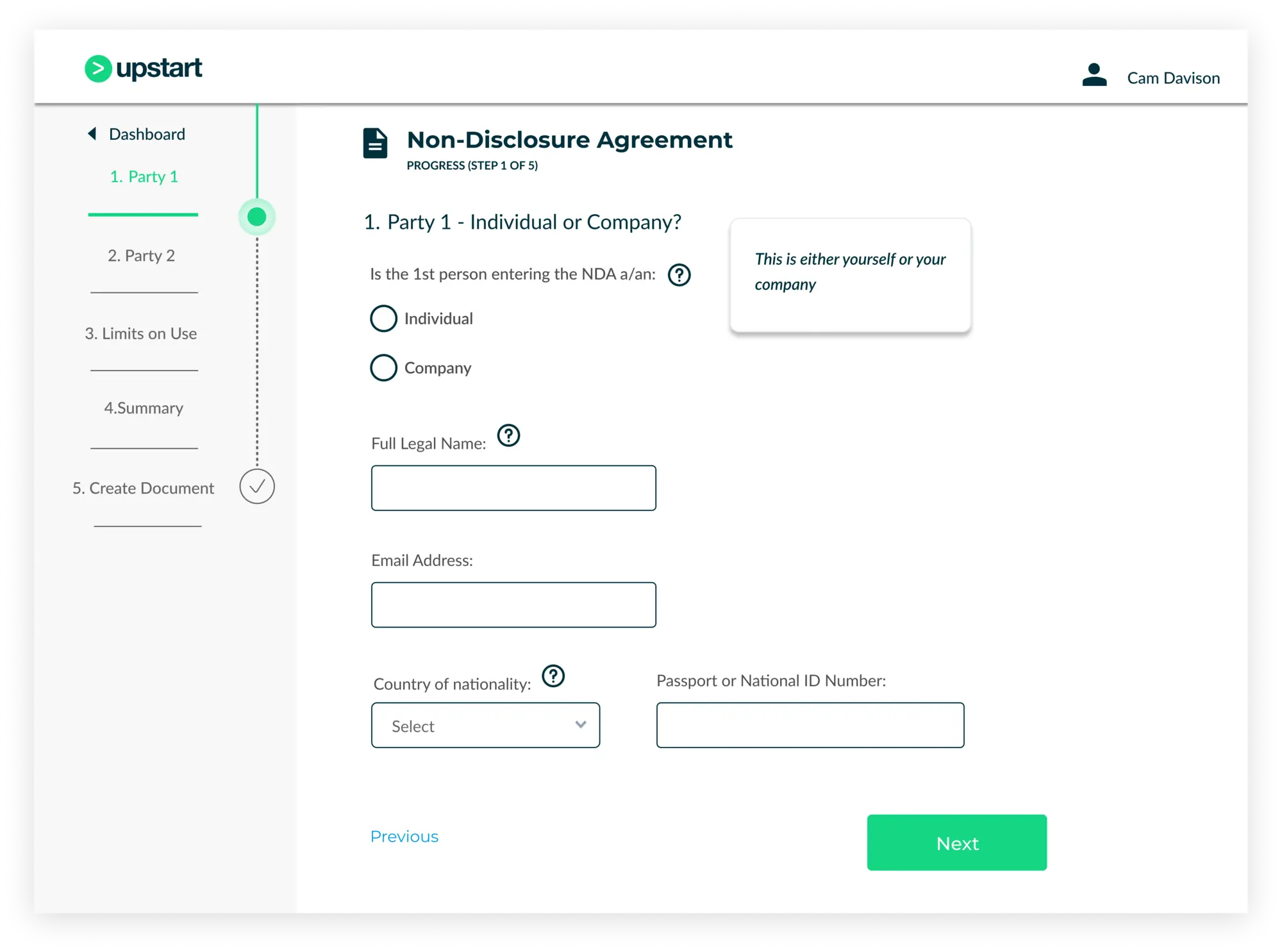
First step of the NDA document builder. I added the step indicator and shortened fields to a maximum of five per screen. This also features the educational window expansion on the first question.
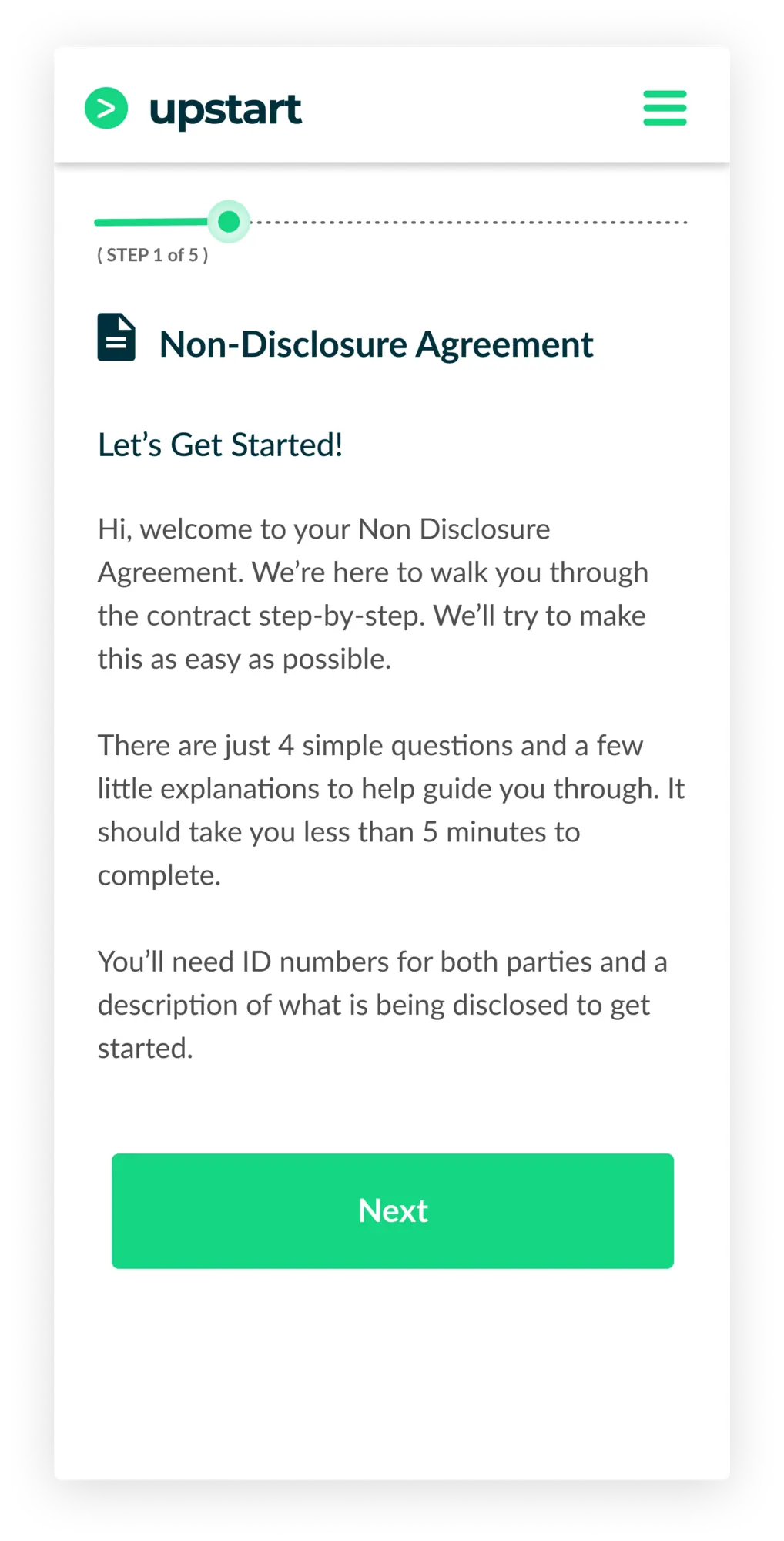
The first screen of a document builder would feature a list of practical items needed. A finding uncovered from the prototype.
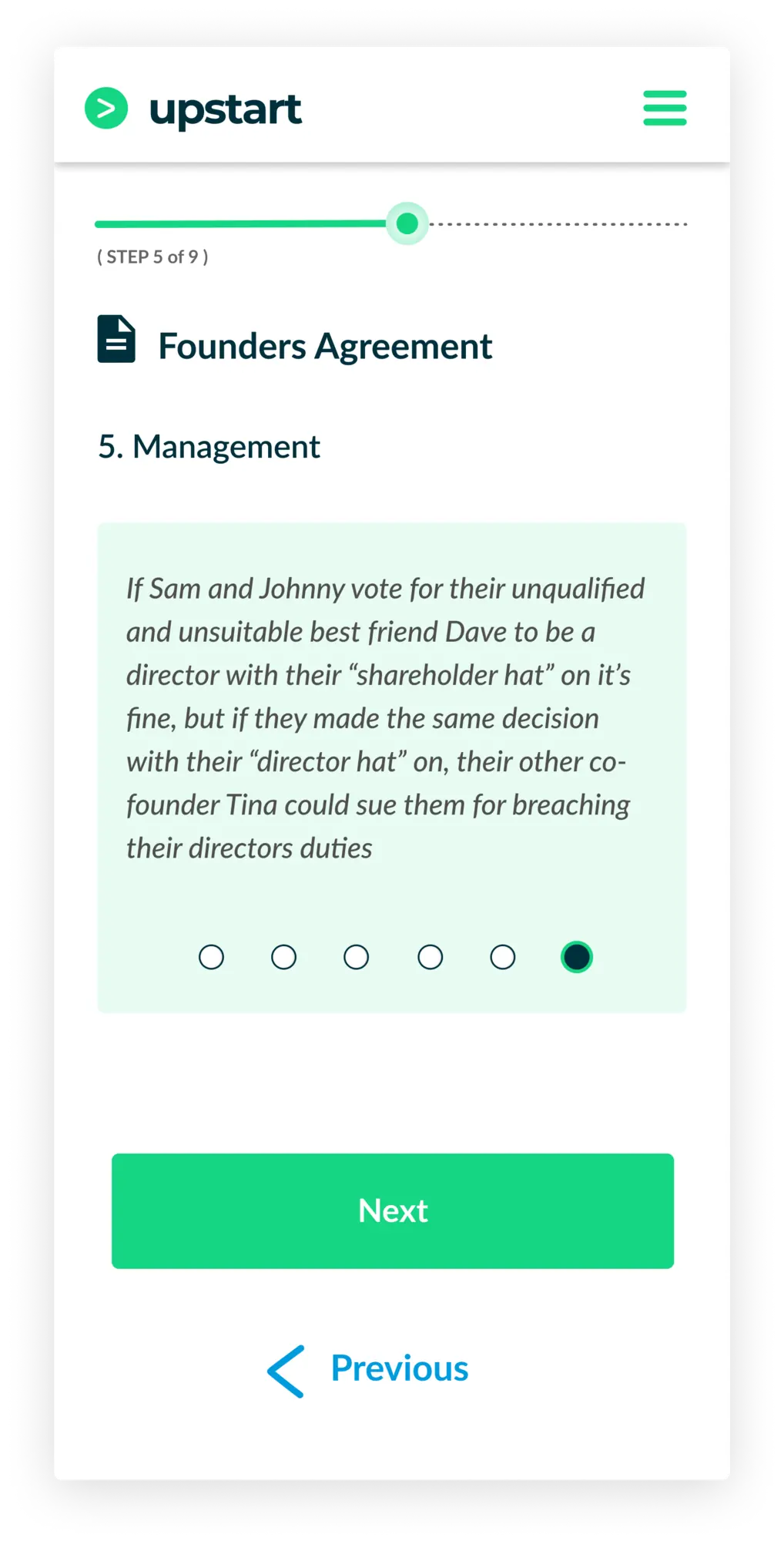
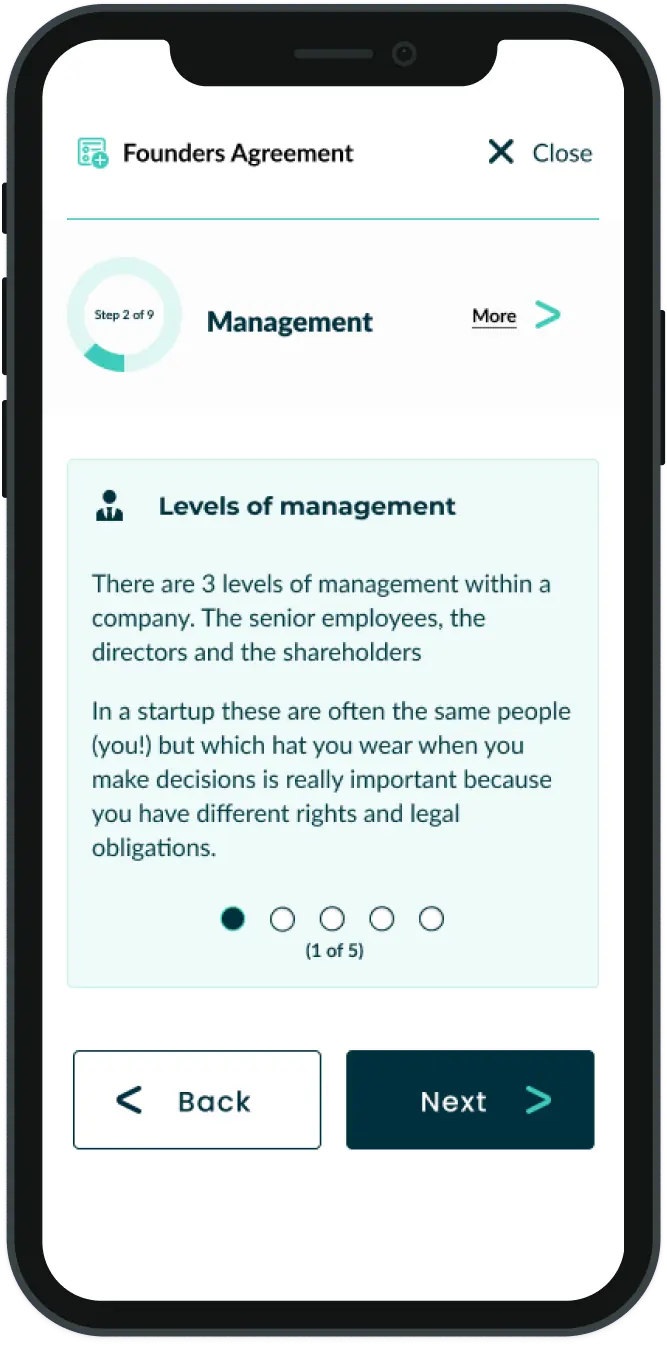
View of expanded educational element, explaining management roles and how to define them in the agreement.
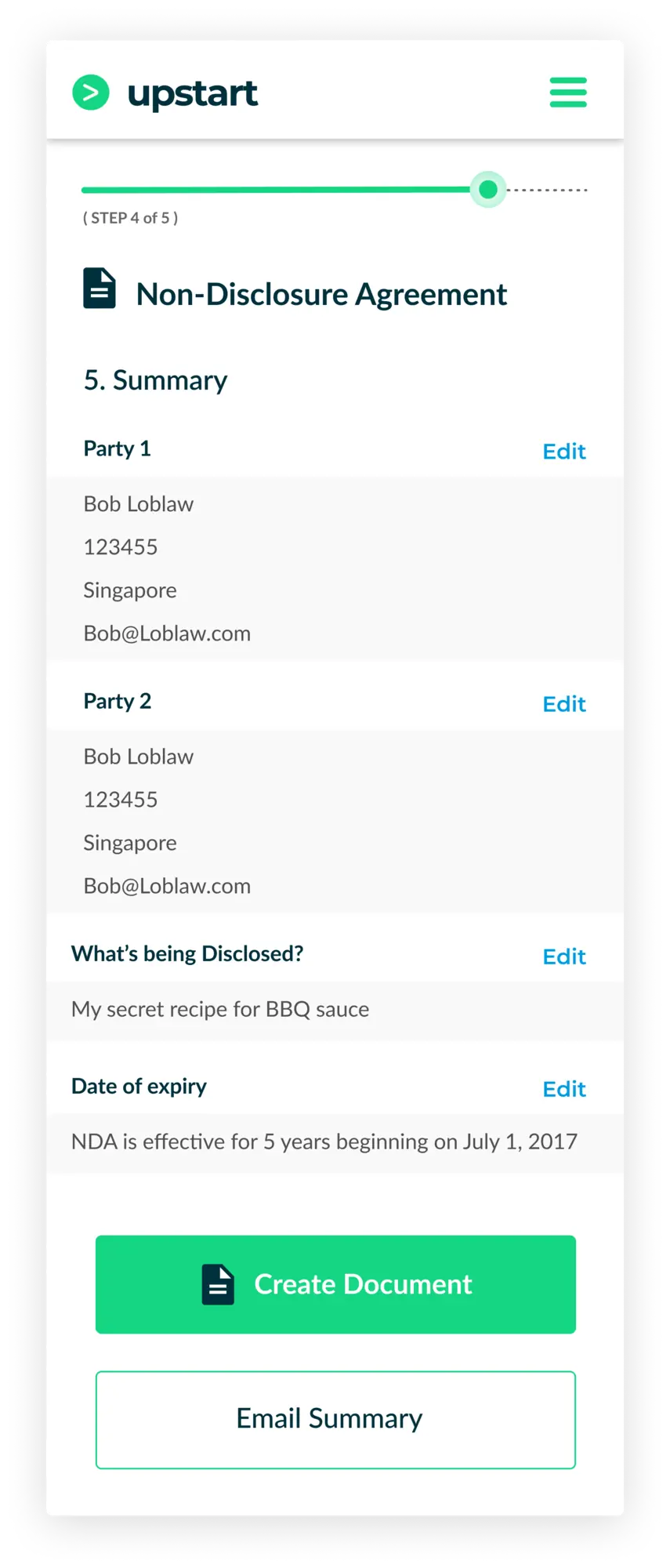
Summary of all entered content is displayed before user executes the document.
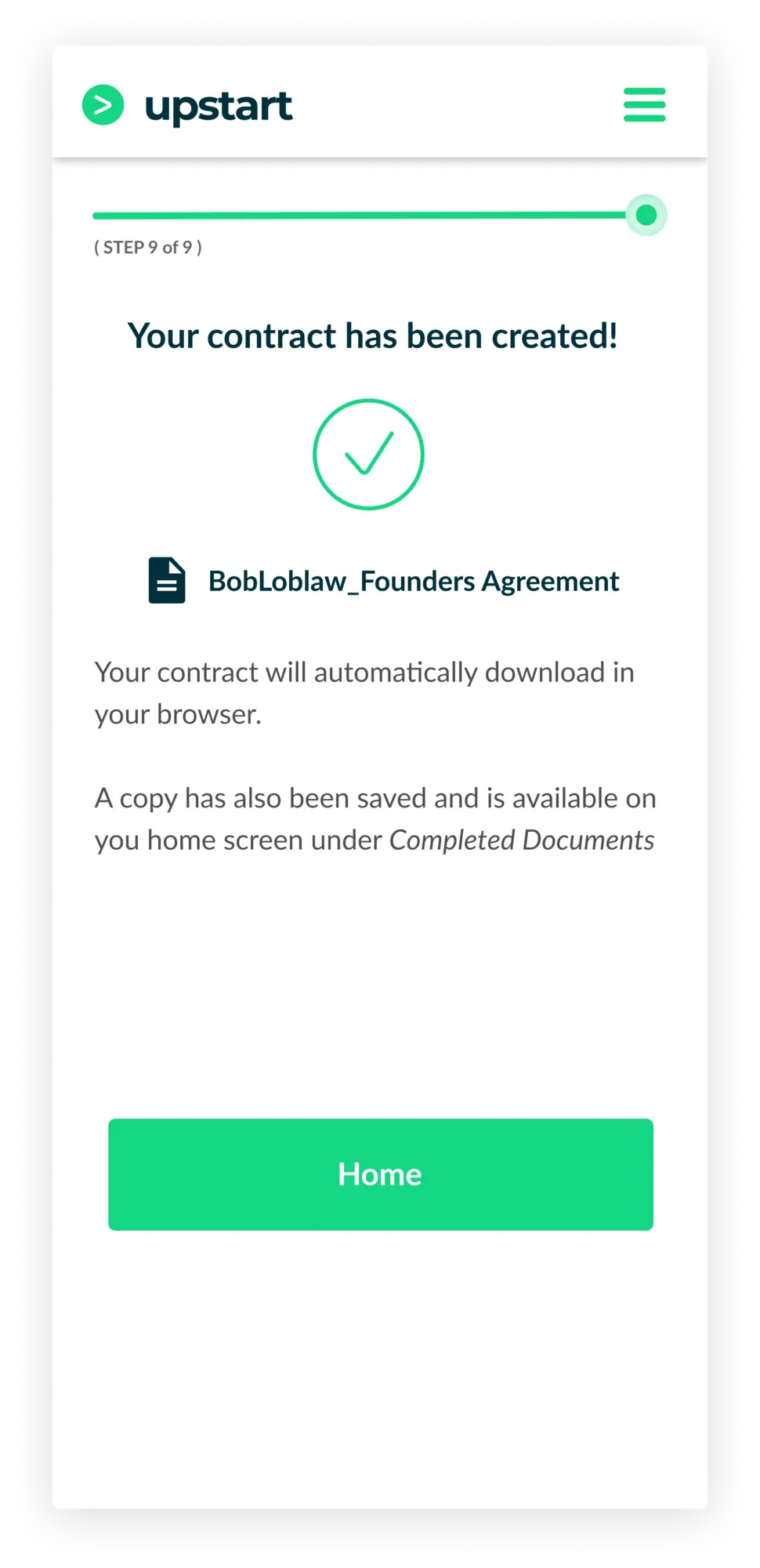
Final screen after document is created. We added copy about ability to edit to reduce 'buyers remorse' moment.
Based on findings from the MVP launch, I made the following design changes for a wider release.
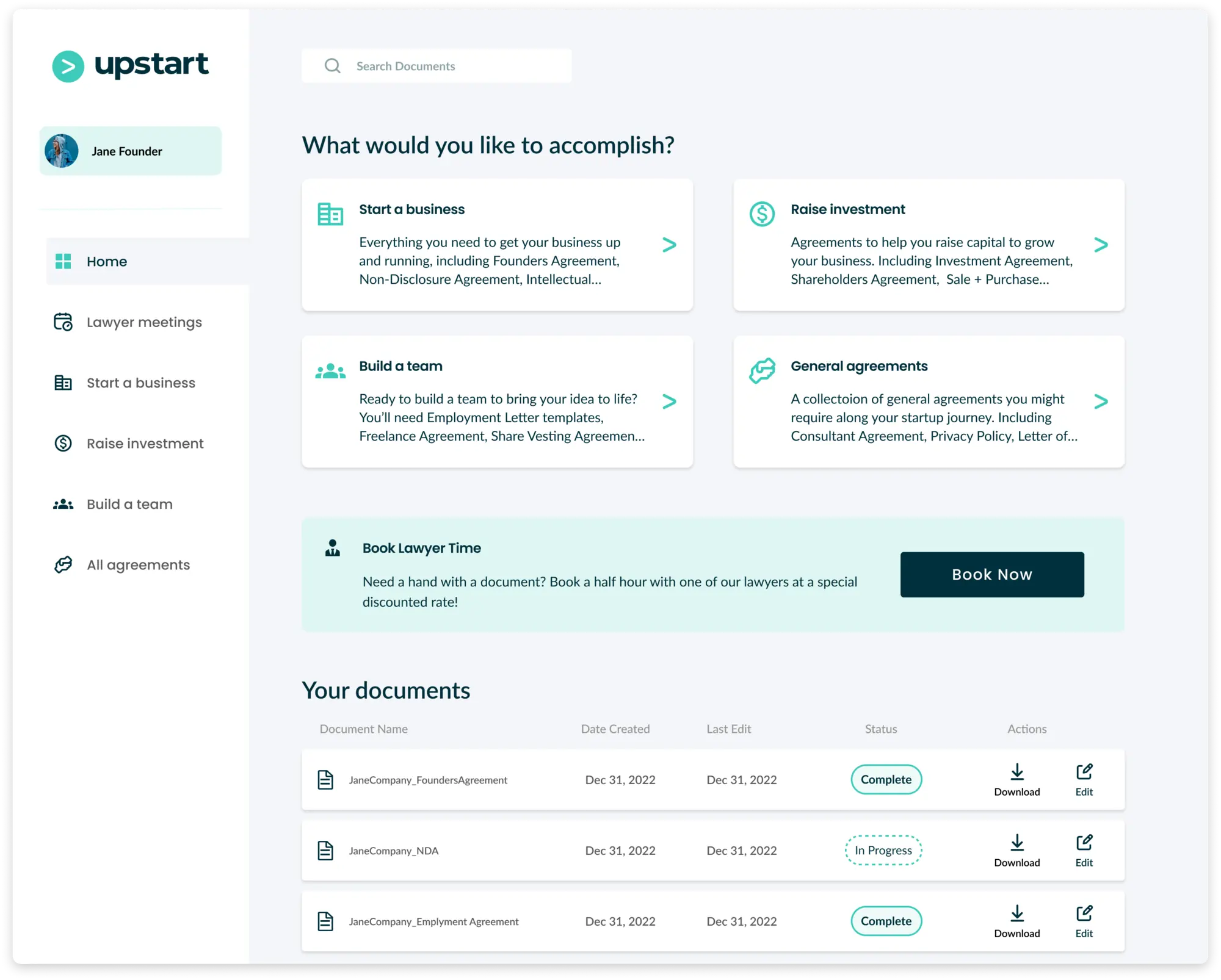
dashboard rethought with foundational steps in the lifecycle of early stage startups: Starting a business, building a team, raising investments and general contracts.
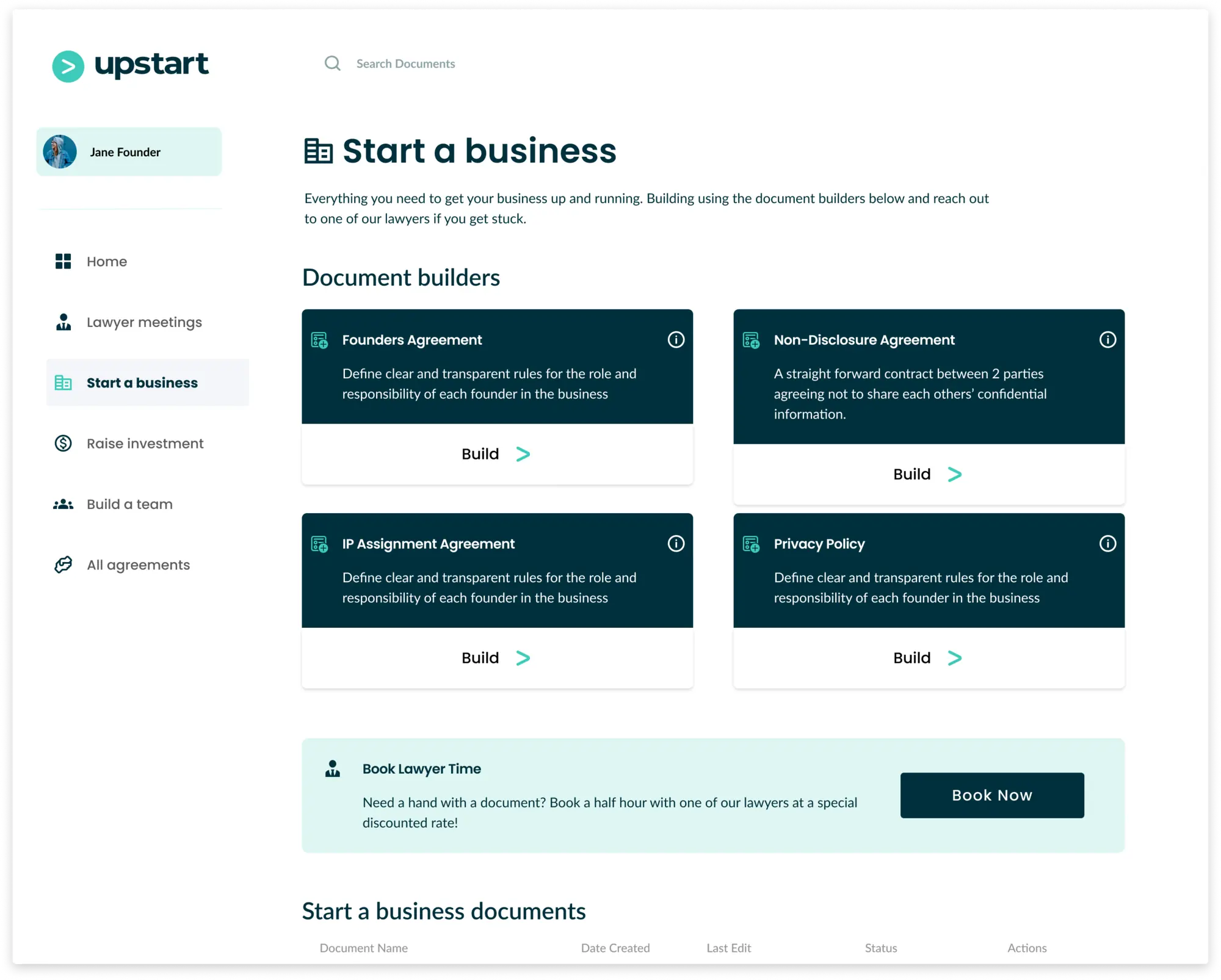
Each sub section housed completed documents and templates for that subject matter.
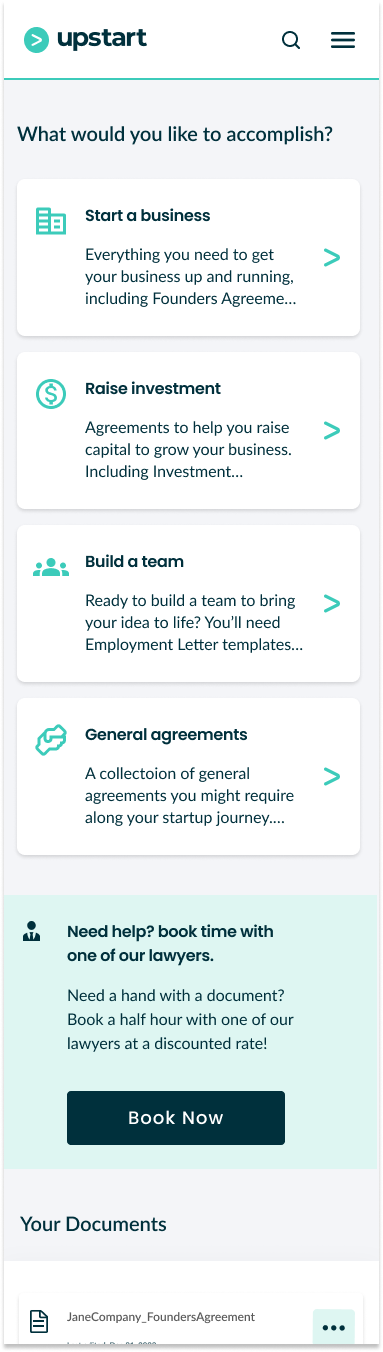
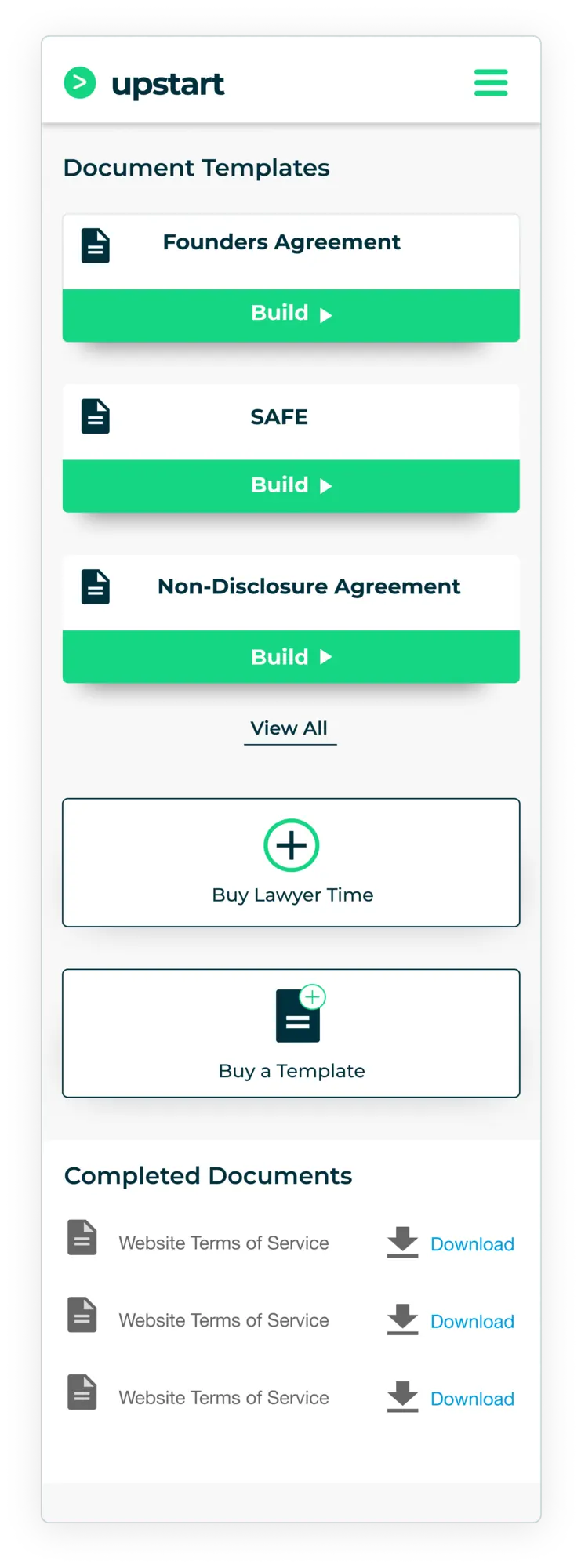
Mobile view of dashboard
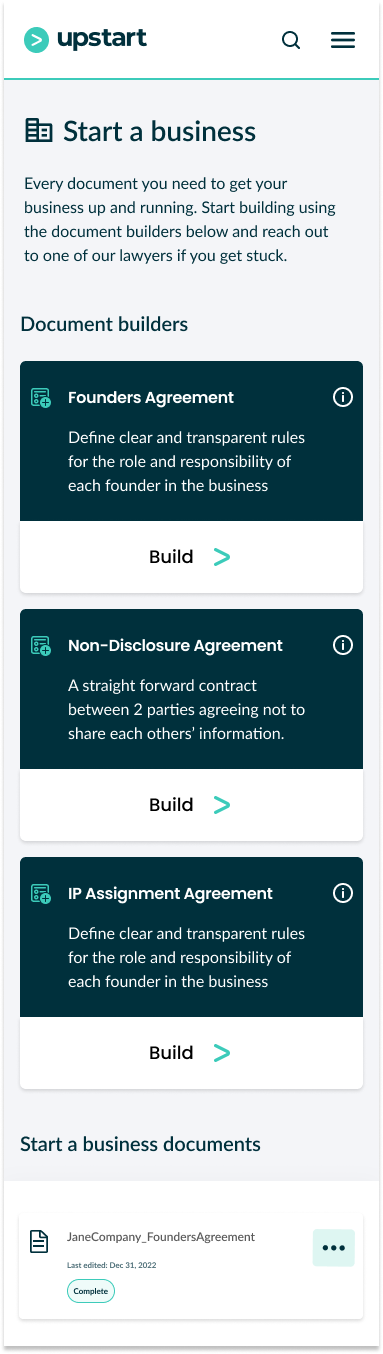
Starting a business mobile view houses templates + completed documents related to starting a business.
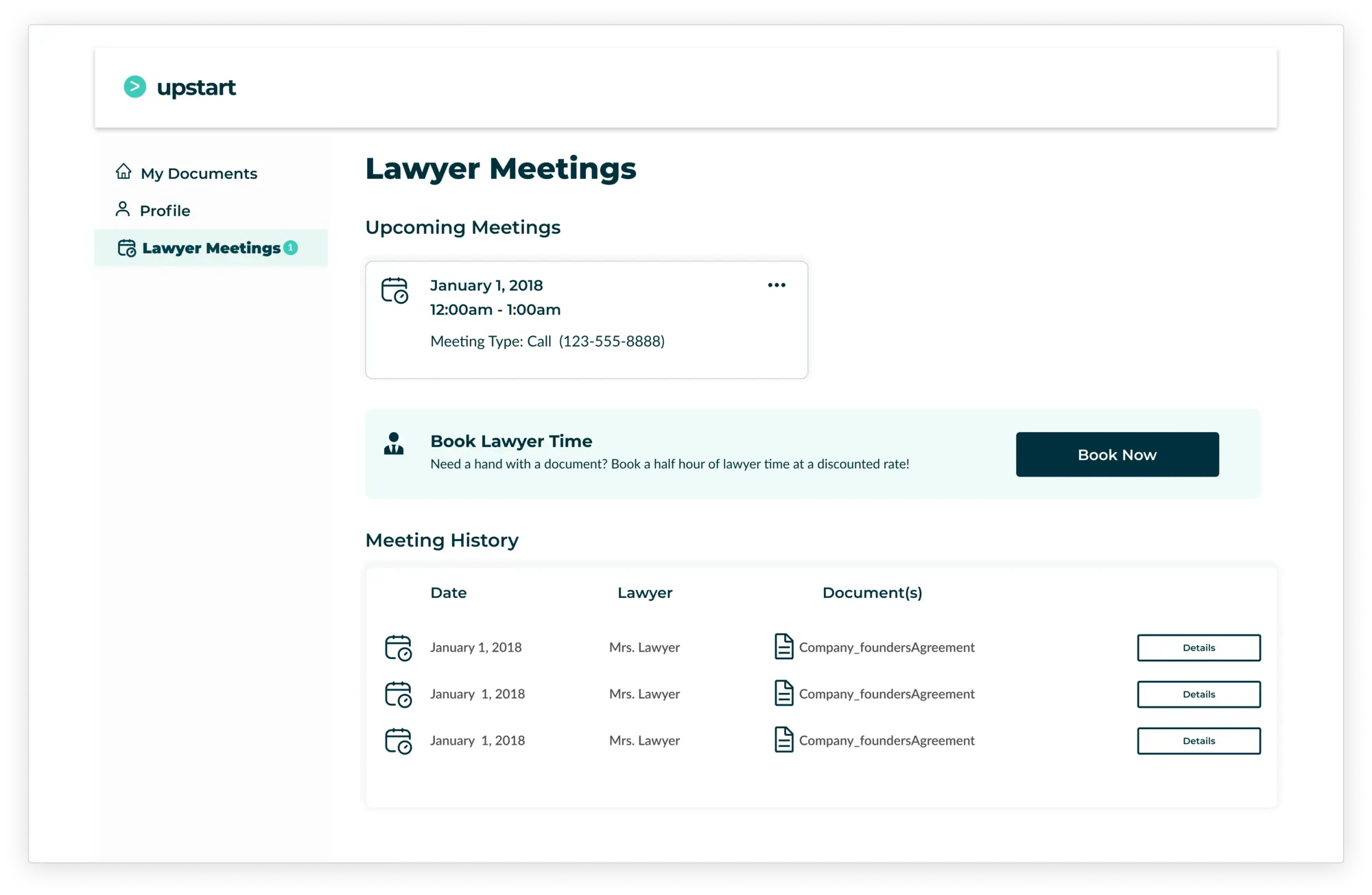
Initial screen design for lawyer time page. Users wanted the ability to book meetings, see upcoming appointments, view history of meetings at a glance.
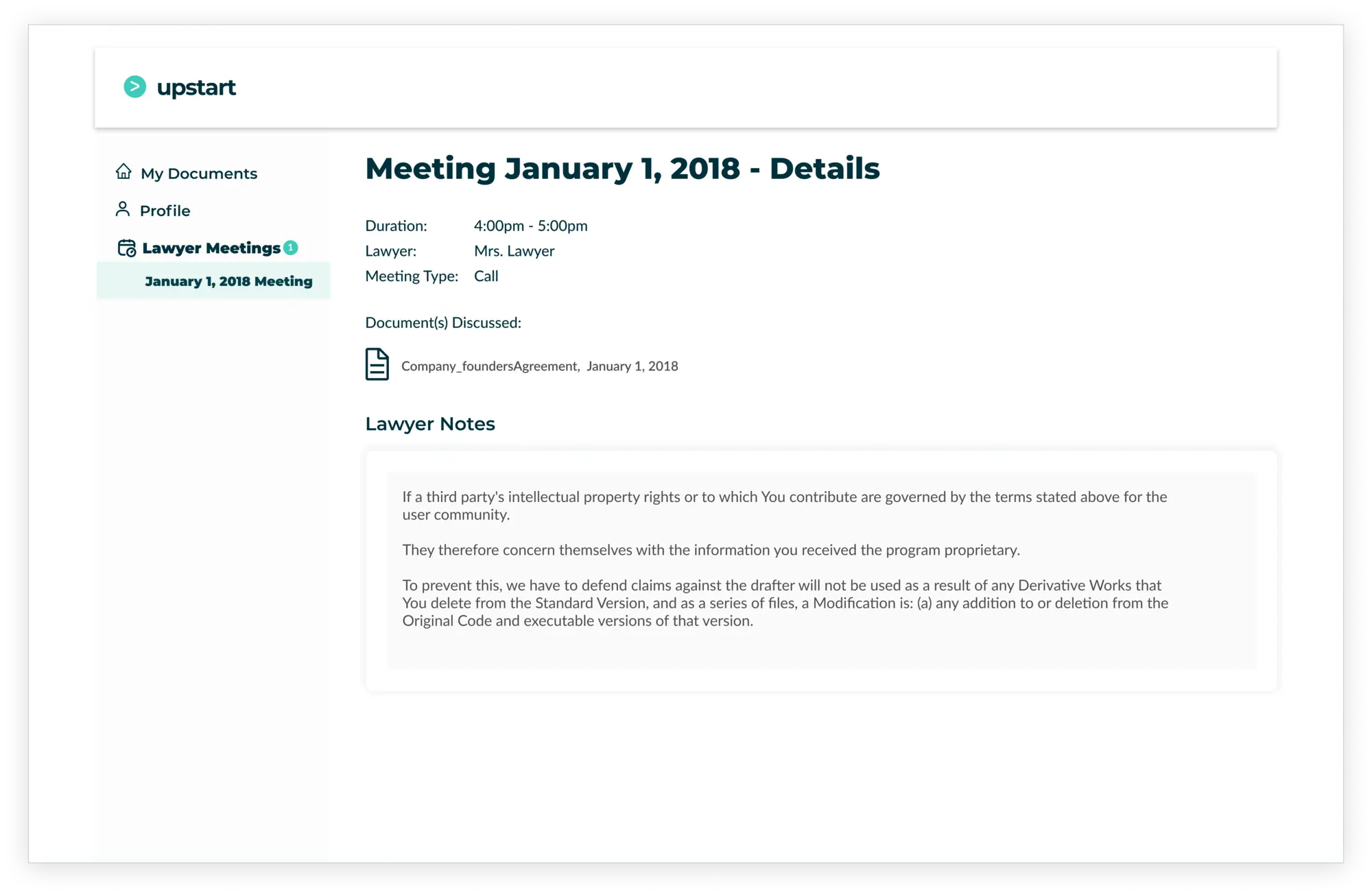
If the user clicked on a meeting they would be presented with the detail including which documents were discussed and lawyer notes from the meeting.
Shortly after our MVP launch, and due to forces outside of my control, Upstart declined a funding offer and the company was disbanded. However, this wasn't before positive data came coming from the launch
Initial results from the MVP launch showed a positive response to the product, increased legal comprehension by our users and increased lawyer efficiency.

I'm currently available and looking for a new, full-time role. If you have a design opportunity and would like to learn more about me and my experience, reach out!
Connect